Paradise Is Not Just A Place
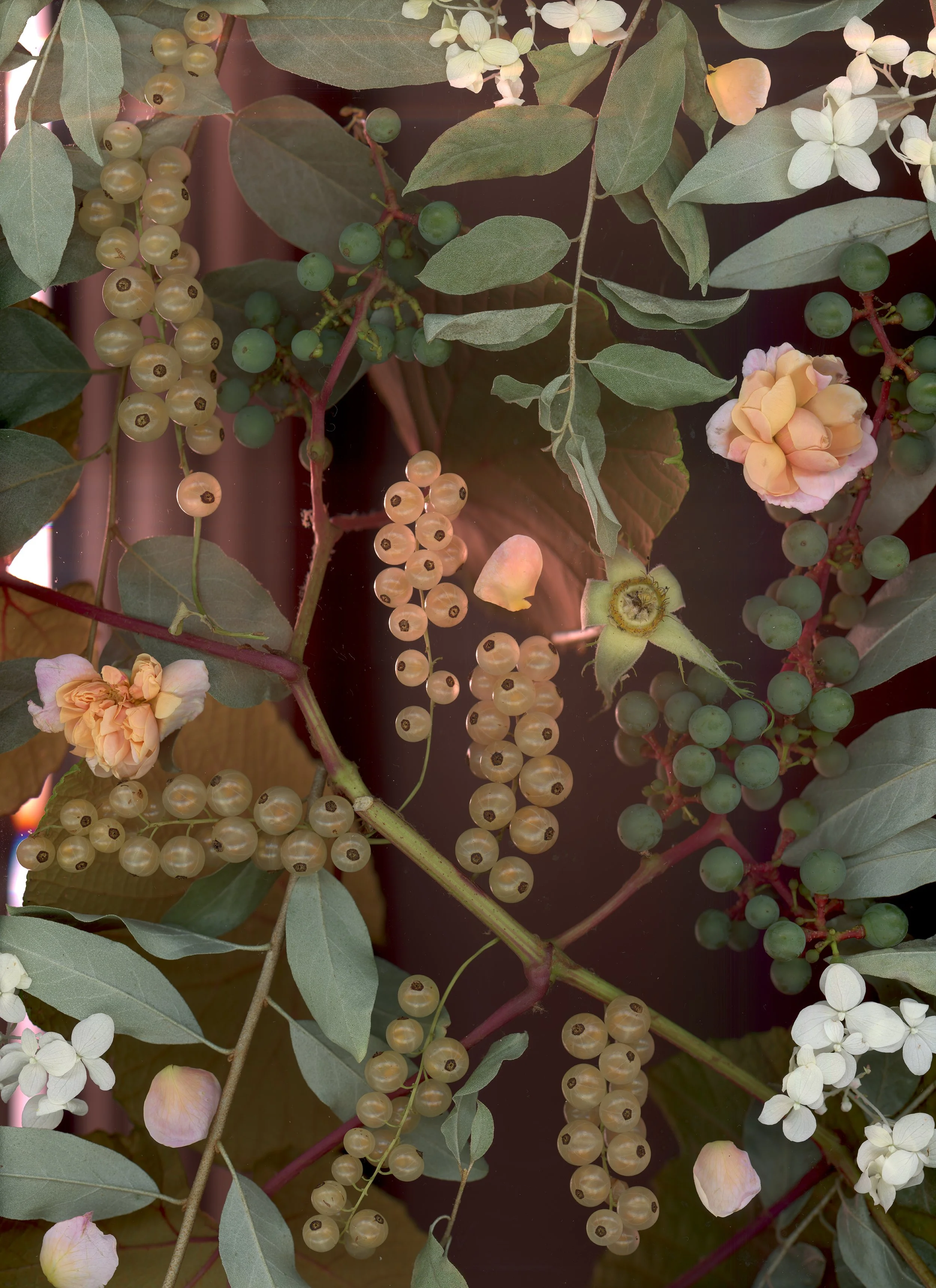
Currant - ‘Paradise Is Not Just a Place’, 2021
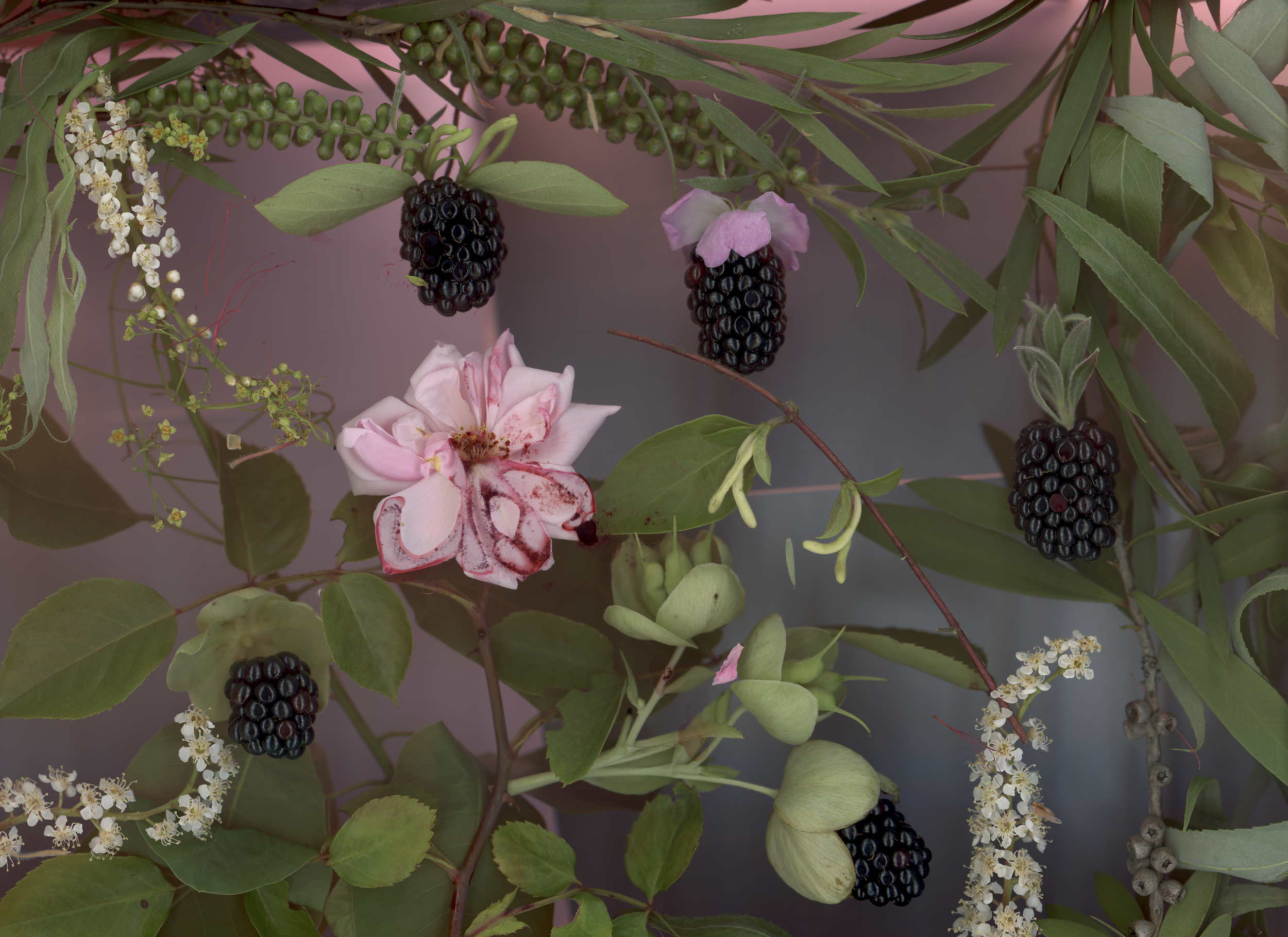
Blackberry - ‘Paradise Is Not Just a Place’, 2021
After the Garden by Anna Souter
Blackberry
Through briar and bramble, shrubs thick with prickles, clothing caught in the abundance.
Picking the fruit for nourishment, the leaves for stomach ulcers, the stems for rope.
Impenetrable thickets keeping livestock in, keeping the circling unseen night terrors out.
Grandmother tells us not to pick them after Old Michaelmas Day (risk of toxic mould) or by
roadsides (risk of toxic lead). She forgets they don’t put lead in petrol anymore.
Staining fingers and mouths, dark red juice drips like Christ’s blood from his crown of
brambles. Far away, a princess lies asleep in a tower defended by vegetation, a briar rose
who punctured her finger on a needle and dreams ever after of prickings. Maybe the plant is
the saviour she is seeking.
Blackberries aren’t written into history, perhaps because they’ve always been available,
always been free for the taking. One of the earliest known cases of human consumption of
blackberries dates from 2500 years ago. The body of the Haraldskaer Woman was
preserved in a Danish bog, buried naked with her clothes placed over her body, pinned
down by branches and wooden poles. Scientists think she was a victim of ritual sacrifice.
In her stomach was a last meal of blackberries. Perhaps she died with a sweet taste in her
mouth.
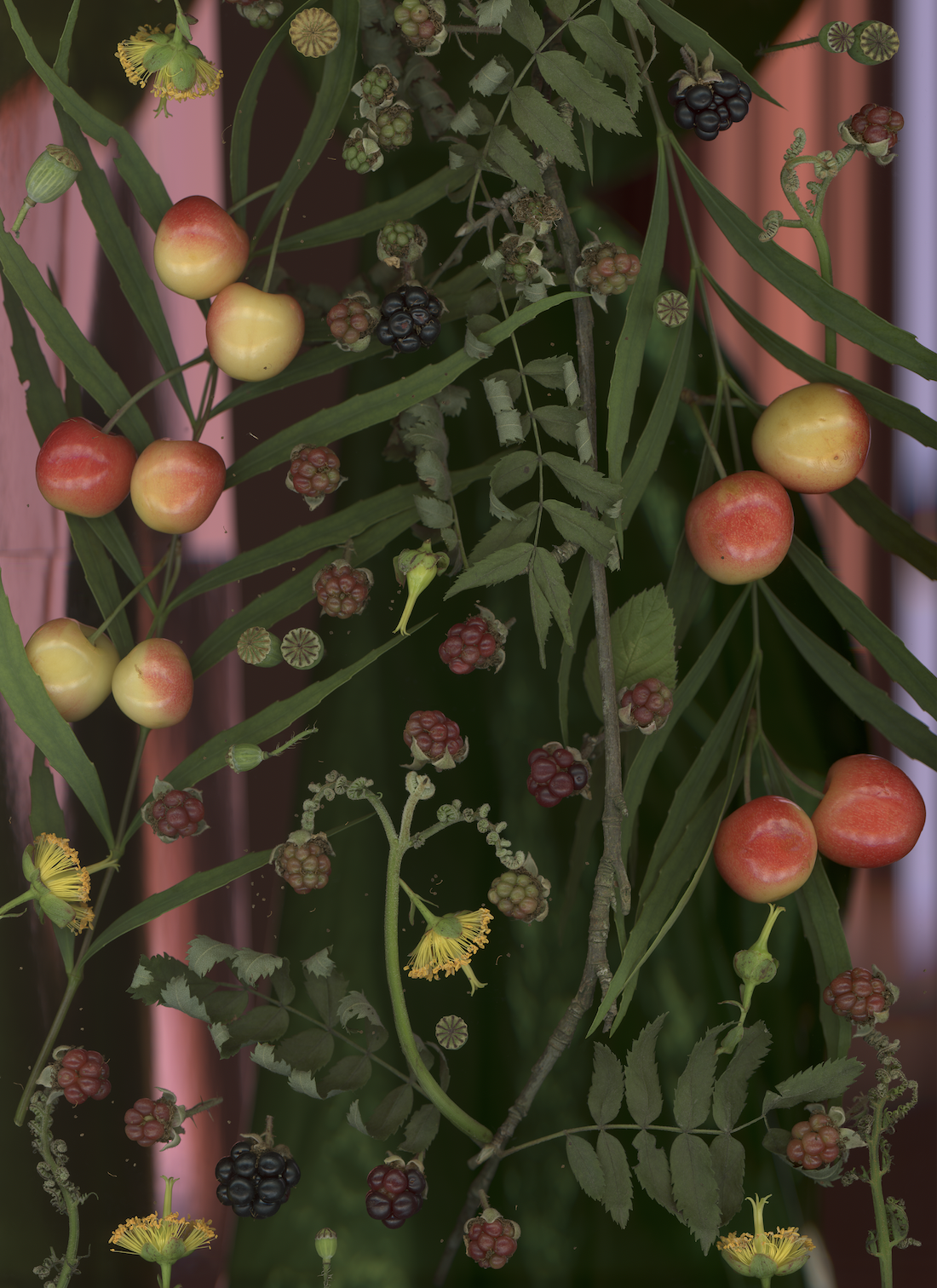
Cherry - ‘Paradise Is Not Just a Place’, 2021
Cherry
Pop her cherry, they said. Take her, they said. Possess her, they said.
Cherries were introduced to England on the orders of Henry VIII, who had tasted their sweet
flesh abroad. Did he feed them to his wives and mistresses before he divorced them,
executed them, or put them through the horrors of royal childbirth and miscarriage? Did he
give them red fruit to hang from their fingers and ears and necks like jewels, the teenaged
virgins and the twice-married women of the court both?
Hieronymus Bosch’s painting The Garden of Earthly Delights was finished around the time
Henry VIII ascended the English throne. The canvas is dotted with red berries. These cherry-
like fruits are worn as fashionable hats, shaken in dance, lifted towards heaven, and speared
on the bills of fantastical birds.
Plucking fruit; a well-known symbol for sexual conquest. In this garden of delights, carnal
desire takes many forms, strange and familiar.
For Bosch’s contemporaries, the garden symbolised a place of courtly love and of lust. As in
the painted triptych, this trope was held in a complex balance with the story of the
prelapsarian Garden of Eden, where sin was unknown – but where its possibility was held
ever-ripe in Eve’s naked body and in the garden’s proliferation of delicious fruit, permitted
and forbidden.
The symbolism is juicy, irresistible, sexy.
Sexist.
The kernel at the heart of the hard cherry stone contains the chemical amygdalin which,
when ingested, releases hydrogen cyanide. A poison.
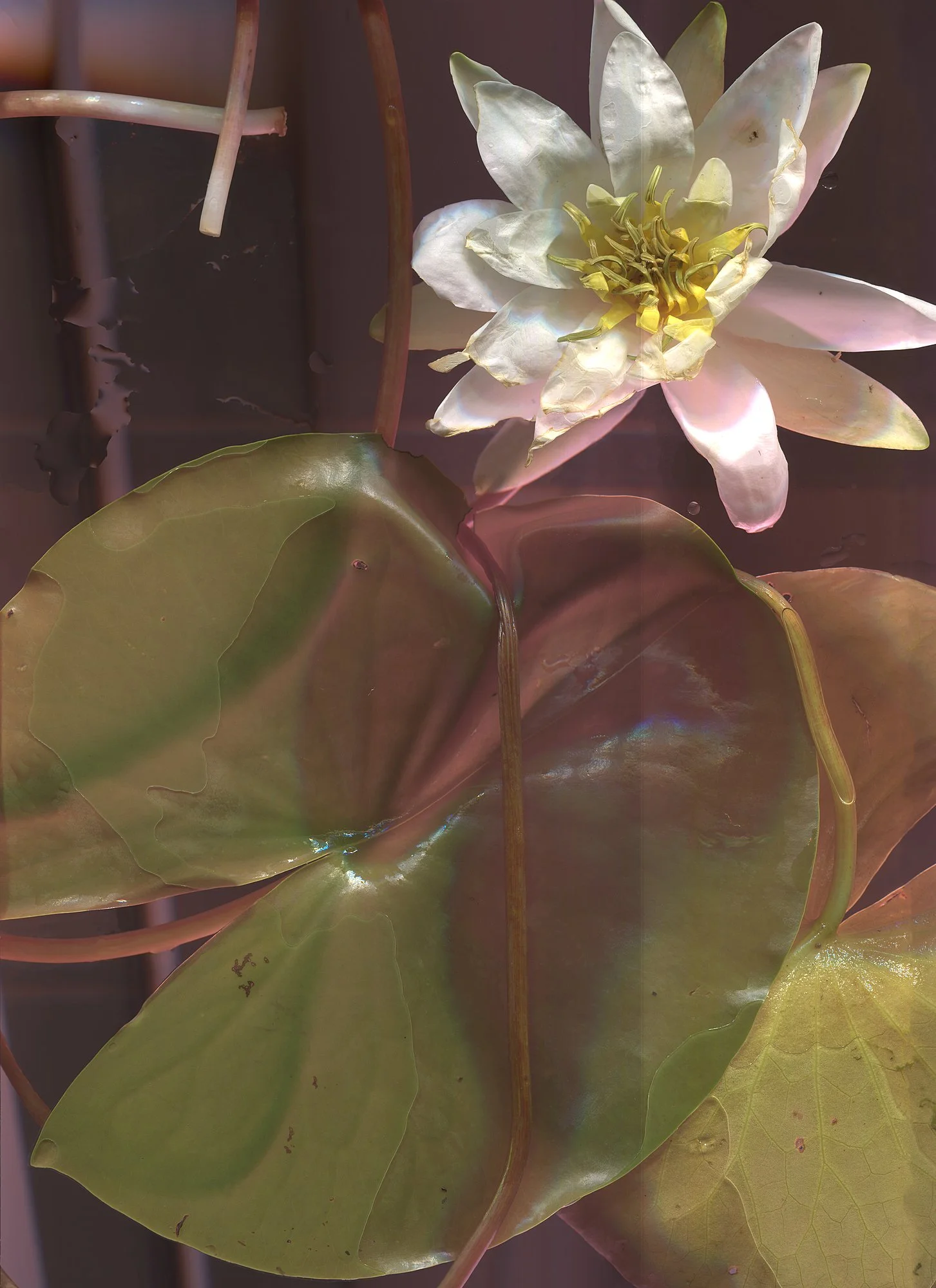
Les Nymphéas III, 2020 - Paradise Is Not Just A Place, 2021
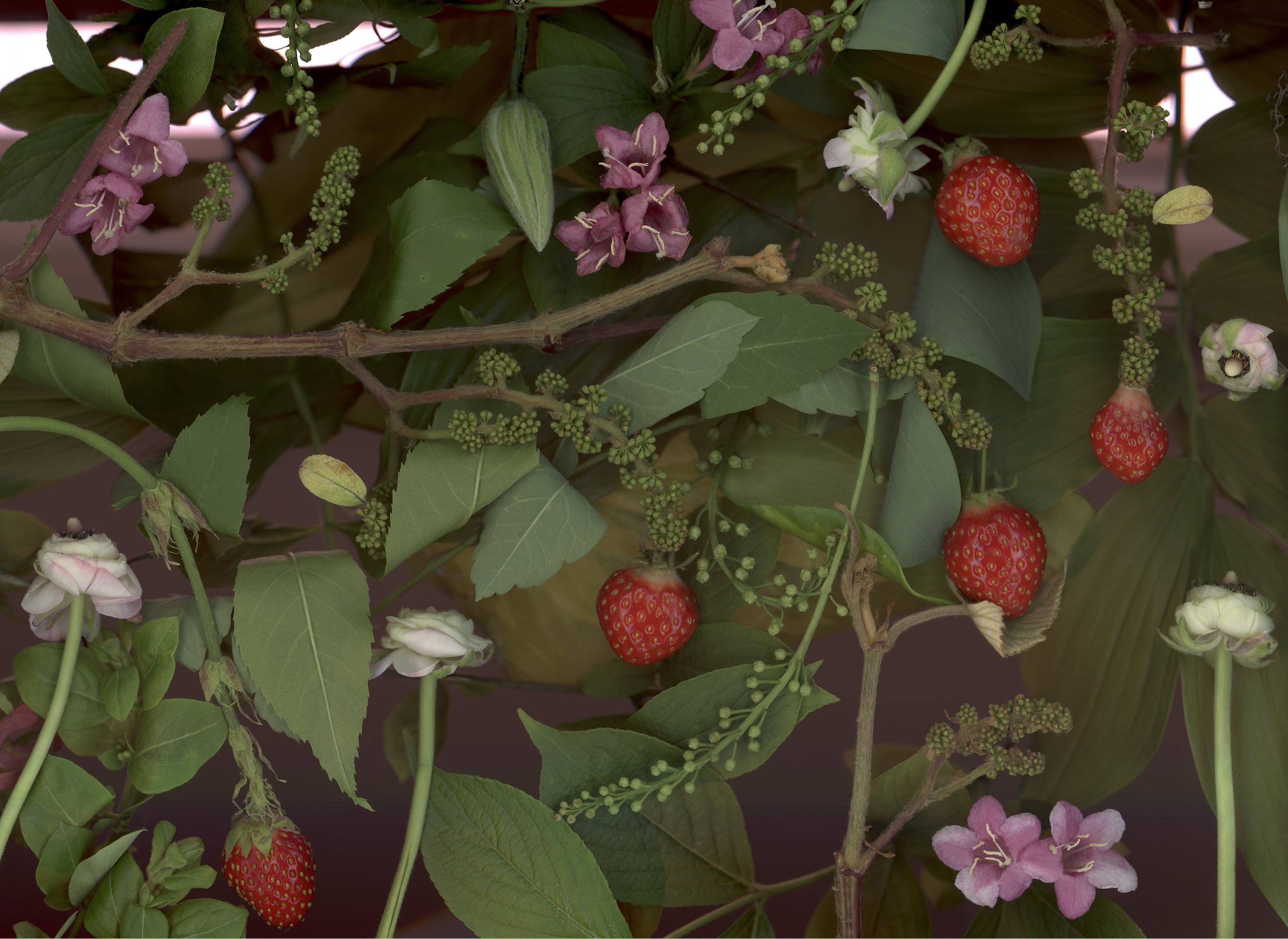
Strawberry - ‘Paradise Is Not Just a Place’, 2021
Grape
A cup that overfloweth-
Grapes were first cultivated around 8000 years ago. For millennia, they have been pressed
to make wine, trodden in huge vats, juice and flesh and seeds squelching up between the
toes in the sensuous touch of foot to fruit.
Skins alive with yeasts, lively colonies of microscopic animacy, the symbiotic push and pull
of fermentation. The full body of the wine poured from the long-necked bottle into the waiting
cup.
Every plant within a grape cultivar is genetically identical, propagated by grafting part of the
chosen plant onto another rootstock. This means that seedless grapes don’t pose a problem
for reproduction through these artificial methods, but the genetic uniformity does make vines
vulnerable to disease. Wines from geographically disparate regions taste different because
of how the cultivar responds to its environment: terroir, climate, weather, altitude, local
cultivation techniques.
In the King James Version of Genesis, we are told that a man shall ‘cleave’ unto his wife;
that strange word simultaneously meaning to split and to join. Like the story of the Garden of
Eden, propagation is a narrative of cleaving: separating and rejoining.
The world is full of contradictory doublings and infinite kaleidoscopic refractions.
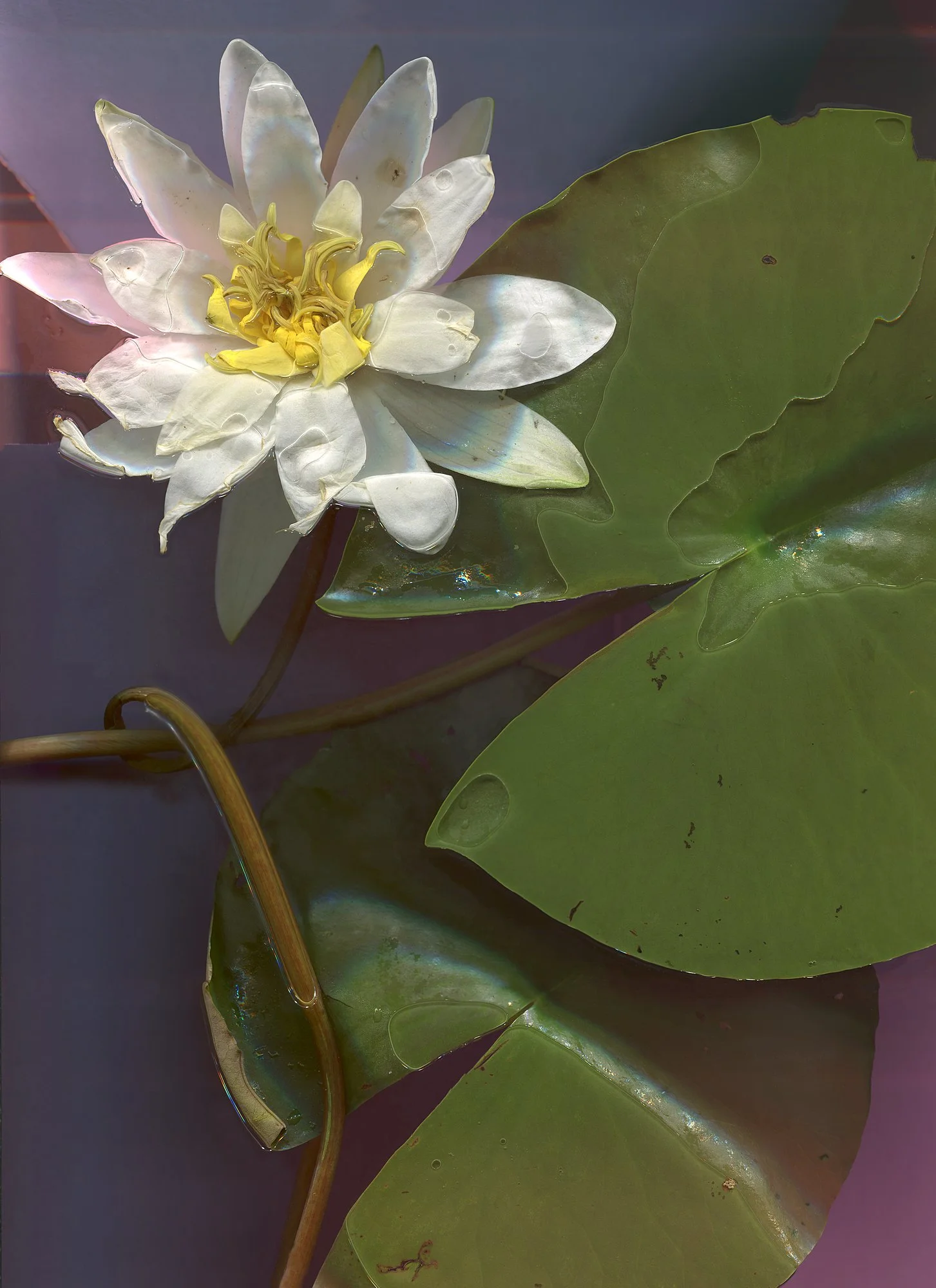
Les Nymphéas II - Paradise Is Not Just A Place, 2021
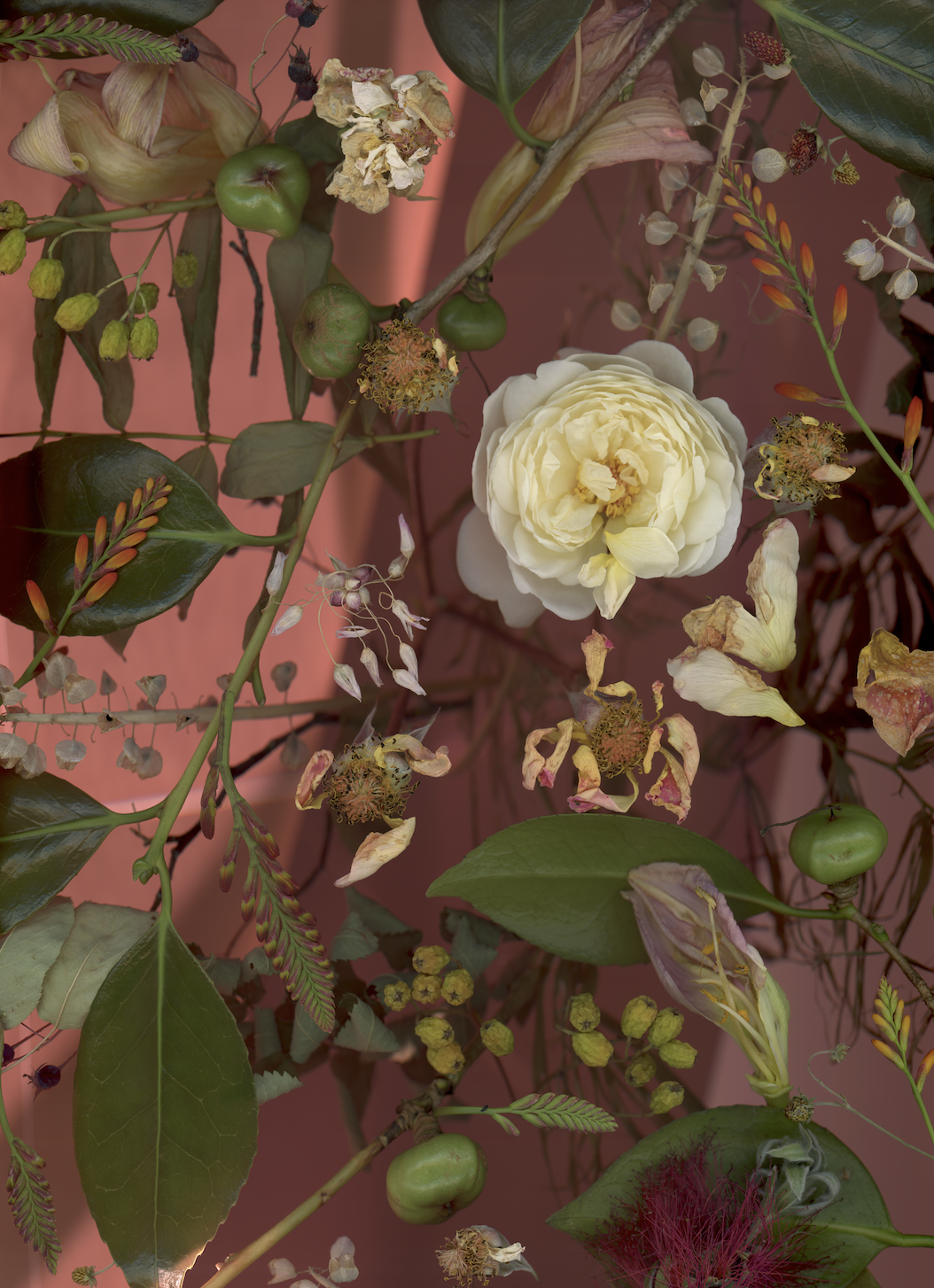
Strawberry - ‘Paradise Is Not Just a Place’, 2021
Pteridomania: fern fever.
In the 19 th century, many Victorians became obsessed with seeking, studying, and collecting
ferns.
It was deemed a particularly appropriate hobby for women because ferns are flowerless;
they don’t brazenly display their reproductive organs to the refractive eyes of insects or the
narrow gaze of the specimen collector.
Ironic, considering ferns have a long-standing association with female genitalia and with
pubic hair. The scientific name for the maidenhair fern genus – adiantum – means “does not
get wet,” because water slides quickly off the delicate leaves. The fern is therefore
associated with purity, innocence, and virginity.
Understanding this visceral symbolism requires sexual knowledge; its meaning would be lost
on the truly innocent woman the fern is supposed to represent. A paradoxical exclusion.
As writer Anne Enright puts it in an essay on the “genesis of blame,” debarred from the
innocence of prelapsarian nakedness in the Garden by the eating of the fruit, we are all
made voyeurs.
Women in long skirts and corsets peering into the dark crevices of woodlands.
Unaccompanied, free, happy. Samples plucked and pressed for specimen books or dug up
for urban garden displays. Exploring fingers brushing filigree fronds and damp earth.
Society began to mutter about hysterical women, alone in the woods. When men hunted for
ferns, it was for the sake of science. When women tried, it became a “mania.”
Female behaviour was pathologized and then dismissed.
Eventually, fern fever was forgotten.
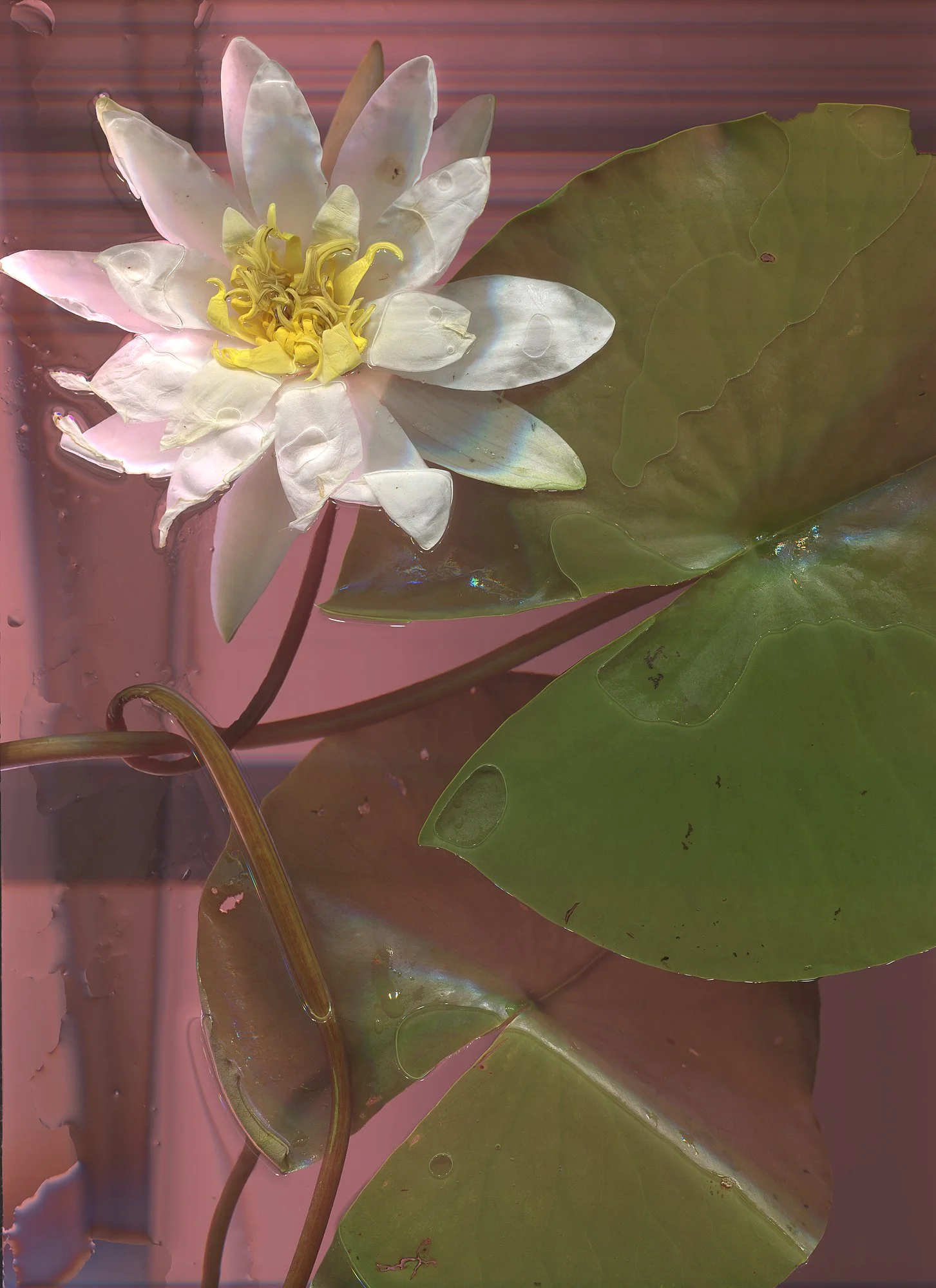
Les Nymphéas I - Paradise Is Not Just A Place, 2021
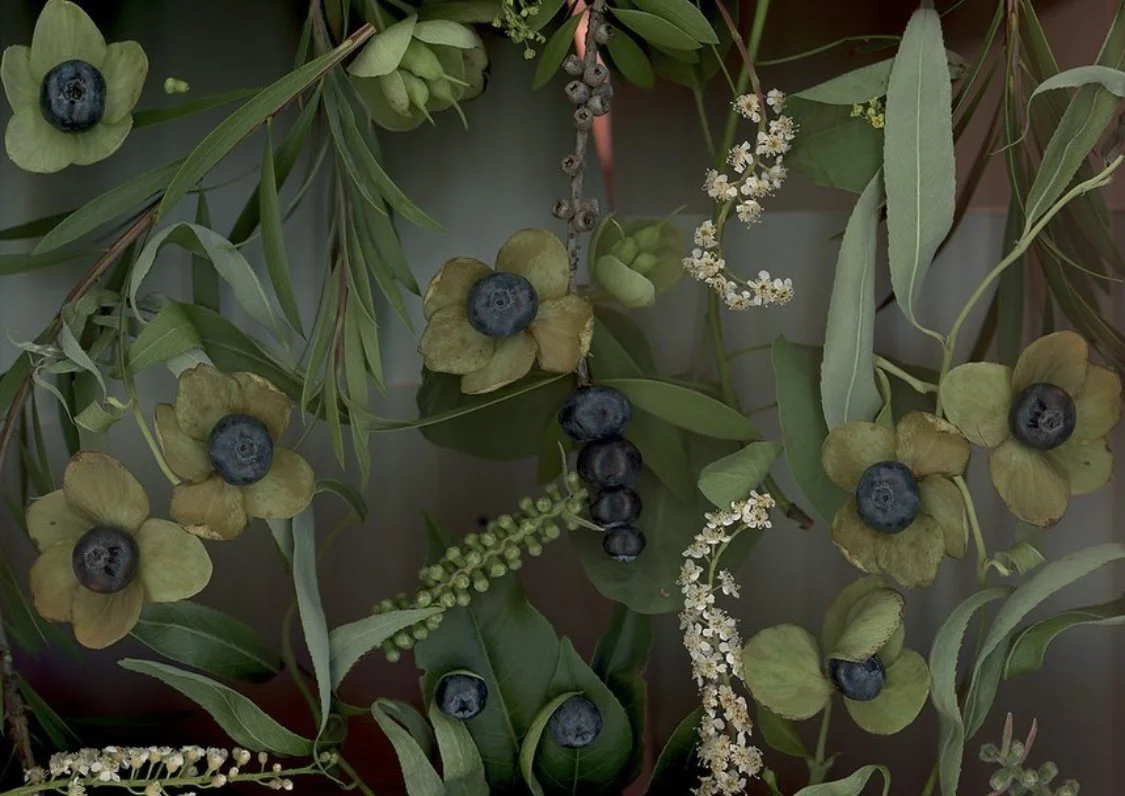
Blueberry - Paradise Is Not Just A Place, 2021
Water lily
The lotus. The womb. The bride.
Across cultures and centuries, the water lily has been used as a symbol of the ‘exotic’
mysteries of the female body. Imagined as a virginal bride, the flower has been stripped of
its biological qualities as a plant and forced to stand-in for the paradoxical patriarchal notion
of both inviolate purity and sexualised female fertility.
Writer Prudence Gibson and biologist Monica Gagliano have presented the water lily as a
feminist plant, reclaiming it from male-driven narratives that attempt to centre the flower as a
reductive symbol. They present water lilies as agential living beings in their own right, which
flourish in clusters and communicate via hormonal signals across their communities.
Capable of asexual reproduction, the water lily cleaves to itself, opening its petals to invite
insects to carry seed from the anther to the stigma, defying gender categorisation.
Simultaneously rooted in the earth and suspended on the water, they inhabit a threshold,
ripe with transformation.
Gibson and Gagliano write, “in terms of the water lily as a feminist plant, it is time to speak
together about the potential to learn from the behaviour of plant life in order to formulate
better models of human collectivity and communicative cooperation.”
The bride stands waiting for no one; after the garden, the world is her lover.